


ArtPro - Art Auction Results
ArtPro HK Limited
When I first opened ArtPro, I expected a narrow reference tool for people already deep into the art market. Instead, I found an app that makes auction-result research feel more approachable, especially when I want a quick sense of how an artist’s work has performed publicly. Its focus is clear: searching art prices and auction results rather than creating, editing, or collecting images. That narrow purpose is also the key to deciding whether it deserves a lasting place on your phone.
ArtPro is a free art and design app from ArtPro HK Limited, with a Teen content rating. It has reached over ten thousand installs and holds a 4.5 average from a small pool of ratings. Those figures suggest a focused audience rather than a mass-market tool, which matches my experience. This is not an app I would recommend to everyone who enjoys looking at paintings. I would recommend it to anyone who regularly needs a starting point for checking artists, prices, and auction history.
From quick curiosity to a useful research habit
Why the first week feels productive
The strongest early appeal is speed of orientation. If I hear about an artist at a gallery, read a name in an article, or see a work mentioned in a conversation, an auction-results search can help me move from vague curiosity to something more concrete. I can use the app as a first research stop before deciding whether a deeper investigation is worthwhile.
That distinction matters. ArtPro is most useful when I treat its results as market clues, not as a complete verdict on artistic quality. Auction prices reflect many things at once: the particular work, its condition, its provenance, its size, its medium, the timing of the sale, and the buyers present. A high result does not automatically mean that every work by the same artist has similar value. The app is helpful precisely because it gives me material to investigate, but it should not replace judgement.
During the first few days, I found several practical ways to use it. A collector can check an artist before attending an auction. A student can compare how different names appear in the secondary market. A designer or art enthusiast can explore artists outside a familiar circle. Even a casual user can search a name encountered in a museum label and gain a more grounded sense of that artist’s commercial visibility.
Related News

Why WhatsApp Messenger Still Makes Everyday Communication Feel Easy

Jurassic World: The Game Is the Better Dino Tycoon for Strategic Players

Threads in Real Life: Who Should Join, Lurk, or Leave

How SHEIN Turned Shopping Into an Endless Content Feed

How to Make Fortnite Feel Smarter on Mobile

Should You Switch to Microsoft Outlook on Mobile?
The app’s focused design also prevents one common problem with broader art platforms: distraction. A general art app may mix inspiration feeds, social posts, digital galleries, educational material, and shopping features. Those can be enjoyable, but they do not always help when the immediate question is, “What have works by this artist achieved at auction?” ArtPro keeps the central task closer to the surface.
A realistic everyday scenario
Imagine that I am considering a work by an artist whose name I recognize but do not know well. I would search the artist in ArtPro before making any assumptions. I would look for the pattern rather than focusing on one impressive result: whether sales appear occasional or regular, whether prices seem concentrated in a particular range, and whether the available auction activity supports the confidence of the seller’s claims.
I would then write down the questions the search raises. Are the results for comparable works, or are they mixed across very different formats? Is the work I am considering from the same period as the examples I found? Does the auction history make the asking price look plausible, or does it simply show that the artist has had some market attention? This workflow is more valuable than treating a single number as a shortcut to a buying decision.
Gallery
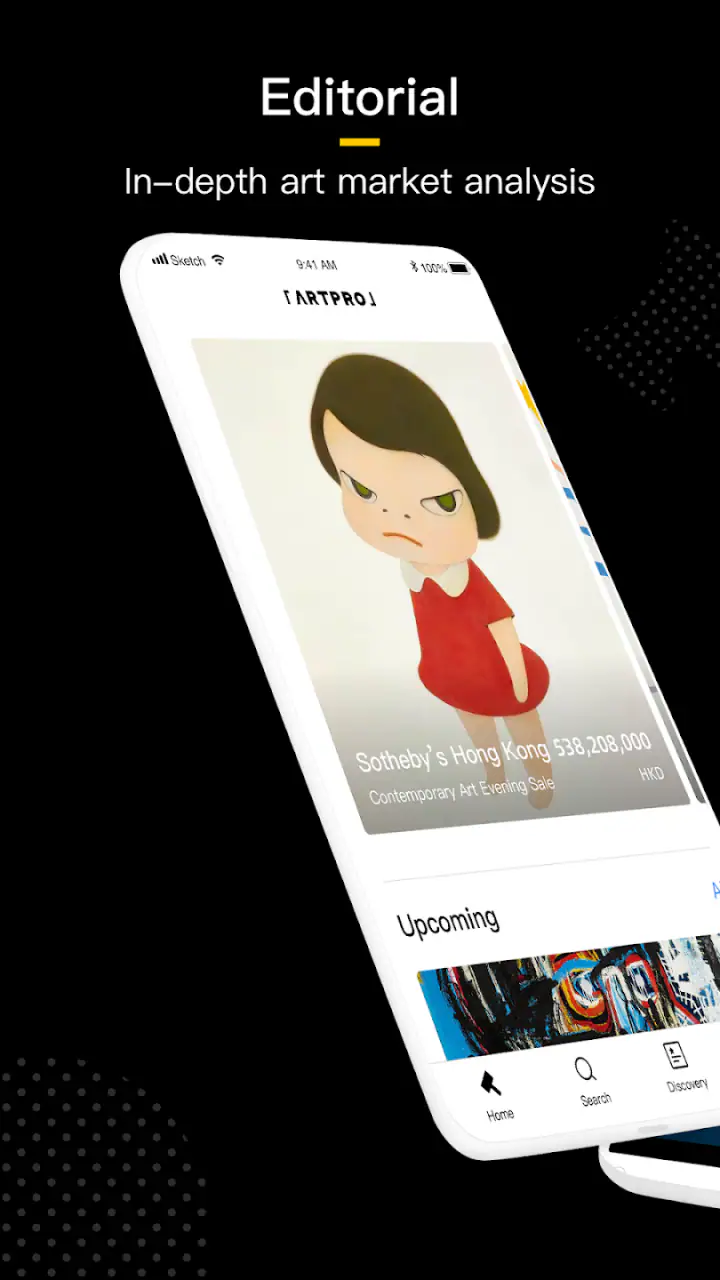
For that reason, my first-week impression is positive but conditional. The app can make research feel less intimidating, yet it rewards users who slow down after the initial search. Its best role is as a compact launchpad for better questions.
What it does better than familiar alternatives
The usual alternative is a web search. A browser gives me a wider range of sources, but it also produces scattered pages, inconsistent terminology, and results that may mix auction records with dealer listings or commentary. ArtPro offers a more purposeful route for the specific task of looking up art prices and auction results.
Another alternative is a general gallery or social discovery app. Those products are often better for seeing images, following artists, and finding visual inspiration. They may be the right choice if I want to browse art casually or build a personal feed. ArtPro is better suited to a question with a market-research angle.
A specialist professional database may still be preferable for serious valuation work, institutional research, or decisions requiring extensive documentation. Such services can offer a deeper working environment and more context, while ArtPro feels more practical for quick checks and early-stage comparisons. I see the app as occupying the useful middle ground between an unstructured web search and a more demanding professional resource.
Three habits that make the searches more reliable
- Search before forming an opinion. If I already believe an artist is expensive or undervalued, I can easily select only the results that confirm me. Starting with a neutral search makes the later comparison more honest.
- Compare like with like. I pay attention to the kind of work represented in the result rather than treating every appearance under an artist’s name as interchangeable. A painting, print, drawing, or sculpture can belong to very different market segments.
- Use a result as a prompt for verification. When a purchase is important, I treat the app’s information as a research aid and continue checking the work’s details, condition, and documentation elsewhere.
These habits are not flashy features, but they are where the app’s practical value grows. Without them, an auction-results tool can encourage overconfidence. With them, it becomes a sensible part of a research routine.
What remains useful after the novelty fades
Month-to-month value depends on your reason for opening it
Many apps feel impressive during the first week because everything is new. The harder question is whether I still have a reason to return later. ArtPro passes that test for a particular kind of user: someone who repeatedly encounters unfamiliar artists, follows the market, studies art, or evaluates potential purchases. For that person, each new name or conversation can create a legitimate reason to search again.
For a casual art lover, the answer is less certain. If I only want occasional inspiration, the app may lose its appeal once I have explored the artists that initially caught my attention. It does not replace a visual browsing service, a museum guide, or a community built around discussion. Its recurring value comes from research needs, not from endless entertainment.
I would describe the app as a reference tool that becomes more useful when connected to a personal project. For example, I might maintain a short list of artists I am studying, compare market activity before visiting an auction, or use searches to prepare questions for a dealer. The app then supports a habit that already exists. It is less convincing when I install it without a clear reason beyond general curiosity.
The free entry point helps here because I can keep it available without making an upfront commitment. However, the presence of in-app purchases ranging from $2.99 to $399.99 per item means I would pay close attention before approving anything. That wide range signals that different purchase options may be aimed at very different levels of use. I would not assume that the free experience and the most expensive option serve the same audience, and I would review each purchase carefully rather than treating an upgrade as automatically necessary.
Who will return regularly
The strongest long-term candidates are collectors who want a convenient first check, art students comparing artists and market histories, advisors preparing preliminary research, and enthusiasts who enjoy following auction activity as part of their interest in art. For these users, the app can become a small but repeated step in a larger workflow.
It may also help someone who is learning how the art market speaks. Auction terminology and price discussions can feel abstract until I connect them with actual artists and results. Searching several names can make market differences easier to discuss, even when I am still a beginner. The app does not turn me into an expert, but it gives me a more concrete basis for learning.
Who should probably choose something else
I would skip ArtPro if my main goal is making art, editing images, collecting references for a mood board, or discovering visual content through a social feed. The Art & Design category is broad, but this app’s purpose is much narrower than the category label might suggest.
I would also be cautious if I need formal valuation support for a high-stakes transaction. A quick search is useful preparation, but a serious decision may require specialist advice and documentation beyond an app-based lookup. In that situation, ArtPro can be one small input, not the final authority.
Finally, if I rarely care about auction prices, the app may become unused storage. Its lasting value is tied to repeated questions about artists and market results. Without those questions, the initial novelty has nowhere to go.
The maintenance burden is small, but the interpretation burden is real
From a phone-maintenance perspective, ArtPro is easy to justify. It is free to install, supports devices running Android 5.0 or later, and its current version is 3.134.56. I do not need to build a complicated system around it. I can open it when a research need appears and leave it alone when I have no reason to search.
The more important maintenance is intellectual. I need to remember that auction records are historical evidence, not promises about future prices. I also need to avoid comparing figures without checking whether the underlying works are genuinely comparable. That extra care is the main cost of using the app responsibly.
I would keep a simple note beside my searches: artist, work type, period, and the reason the result matters. This prevents a common mistake in market research, where I remember a striking result but forget the context that made it unusual. ArtPro is more useful when it feeds an organized process instead of becoming a collection of isolated searches.
Where fatigue can set in
The first source of fatigue is repetition. Searching names can be satisfying at the beginning, but the experience may feel less rewarding if I am not working toward a specific comparison or decision. A market-reference app does not automatically create a reason to return every day.
The second is the temptation to reduce art to a price. If I use the app only to rank artists by auction performance, I lose much of what makes art difficult and interesting. The tool is strongest when it adds market context to visual, historical, and cultural judgement rather than replacing those forms of understanding.
The third is uncertainty around paid options. Because individual in-app purchases can extend from a small amount to a much larger one, I would be deliberate about what I am buying and whether it matches my needs. Someone conducting occasional personal research should not assume that a premium purchase designed for heavier use will deliver proportional value.
The fourth is the gap between a quick result and a complete record. A search may answer the first question while creating several more. That is not necessarily a flaw; good research often works that way. Still, users expecting one-screen certainty may find the process frustrating.
How I would build it into a monthly routine
I would not open ArtPro randomly and scroll until something catches my eye. Instead, I would use it at defined moments: before attending an auction, after discovering an unfamiliar artist, while comparing a shortlist, or when checking whether a seller’s market-related statement deserves closer examination.
Once a month, I might review a small group of artists and record only the observations that affect my next action. Is this artist worth researching further? Do I need to compare a different type of work? Should I ask for more documentation? This keeps the app from becoming a passive source of numbers and turns it into a decision-support step.
That workflow also helps control spending. I can learn whether the free access is enough for my normal use before considering any in-app purchase. If I eventually need more, I have a clearer idea of what problem I am trying to solve instead of paying simply because the app is interesting.
Privacy, age, and practical expectations
The Teen rating is worth noticing if the app will be used by a younger person or on a shared family device. I would explain to a teenager that auction prices can be informative but are not a measure of artistic worth. For adults, the rating is unlikely to affect ordinary research, but it still provides useful context about the intended audience.
I would also set realistic expectations about the phone format. An app is convenient for a quick lookup, but serious comparison work can become easier on a larger screen or alongside notes and source material. ArtPro’s advantage is accessibility at the moment a question arises; it does not eliminate the need for broader research when the decision matters.
My long-term verdict on keeping ArtPro installed
After the initial curiosity fades, I think ArtPro earns lasting space for users who genuinely follow artists, auctions, or art-market questions. Its value is not that it turns a complicated field into a simple answer. Its value is that it gives me a focused starting point when I need to investigate an artist’s auction presence without first sorting through a broad and noisy web search.
I especially like the way it can fit into a cautious buying workflow. I can search first, compare relevant examples, note what still needs verification, and then decide whether to continue with a dealer, auction house, specialist database, or independent expert. That sequence is more responsible than allowing one attractive result to drive a purchase.
Still, I would not keep it installed merely because it has a strong average rating or because it belongs to the art category. The app’s audience is specific. If I want daily visual discovery, creative tools, or a social art community, another option will serve me better. If I need authoritative professional valuation work, I would use a specialist service and treat this app as preliminary support.
The developer, ArtPro HK Limited, has positioned the product around a clear research need, and the current release shows that it remains an active option for compatible Android devices. Its free availability makes trying it straightforward, while the paid items require sensible restraint. I would begin with ordinary searches, learn how well they fit my own questions, and only then consider whether an optional purchase has a practical purpose.
My final recommendation is simple: install it if auction history is part of your real interest in art, not just a topic you might explore once. Give yourself a week to test it with several artists, then judge whether it supports an ongoing habit. For me, it works best as a compact research companion—useful before deeper investigation, valuable when approached carefully, and not a substitute for expert judgement. Its lasting strength is focused context, not endless novelty.
FAQs for ArtPro - Art Auction Results
What is ArtPro - Art Auction Results used for?
ArtPro - Art Auction Results is designed for people who want to research the auction market for artworks. It provides access to historical sale information, helping users check artists, auction prices, dates, and related lot details. Collectors, dealers, investors, students, and art enthusiasts can use it to compare results and better understand market trends before making decisions.
Can ArtPro help me estimate the value of an artwork?
The app can be a useful reference when researching an artwork’s possible market range, especially if comparable works by the same artist are available. However, auction results should not be treated as a formal valuation. Condition, provenance, size, medium, authenticity, exhibition history, and current demand can significantly affect the final price, so professional advice may still be necessary.
Does ArtPro include auction results for every artist and artwork?
ArtPro offers access to auction-related information, but coverage may vary depending on the artist, region, auction house, date, and type of artwork. Well-known artists and frequently traded works are generally easier to research than emerging or less-documented names. Users should also remember that an absent result does not necessarily mean an artwork has never been offered at auction.
Is ArtPro suitable for beginners who are unfamiliar with the art market?
Yes, the app can be useful for beginners because it gives them a practical way to explore artists and historical auction activity in one place. Nevertheless, new users should interpret prices carefully and learn the difference between estimates, hammer prices, and final prices that may include fees. The app supports research, but it does not replace independent learning or expert guidance.
Is ArtPro - Art Auction Results free to download and use?
Availability, pricing, and access to specific features may depend on the version of the app, platform, region, or subscription terms shown in the relevant app store. Before downloading, users should review the current listing for in-app purchases, account requirements, and any limitations on searches or detailed results. Checking these conditions first helps avoid unexpected charges or restricted access.
Pros
- Useful auction price data for researching artists and artworks.
- Helps compare historical sales across different auction houses.
- Search tools make it easier to find specific artists or lots.
- Can support collectors when estimating potential artwork values.
- Valuable reference for spotting market trends over time.
Cons
- Coverage may vary depending on the artist
- region
- and auction house.
- Historical prices do not guarantee an artwork’s future market value.
- Some advanced information may require a paid subscription.
- Results can be difficult to interpret without art-market knowledge.
- Artwork condition and provenance may not always be fully detailed.


